Katusha Team: The Rise, the Victories, and the Legacy of One of Cycling's Greatest WorldTeams
“A team is remembered not only for the races it wins, but for the way it changes the sport.” Few professional cycling teams embodied that idea better than Team Katusha.
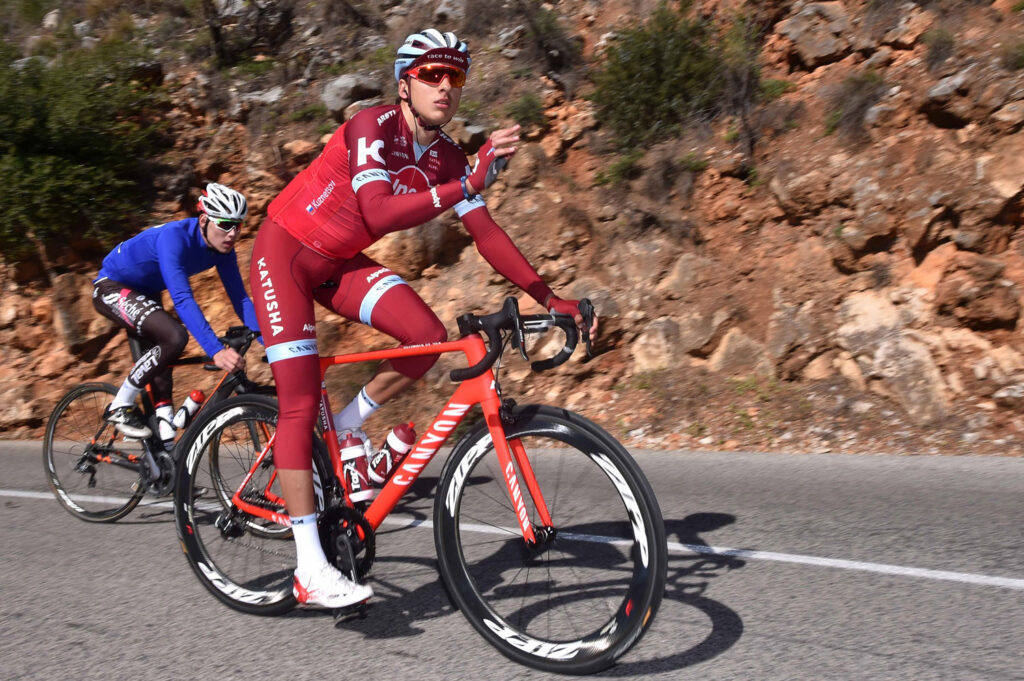
For just eleven seasons, Team Katusha was one of the defining forces in professional road cycling. Between 2009 and 2019, the Swiss-registered UCI WorldTeam built a reputation for fearless racing, tactical intelligence and remarkable versatility. It won on cobbled roads in Belgium, on the steep climbs of Italy, in the high mountains of Switzerland and on the grand boulevards of the Tour de France.
More importantly, Katusha never depended on a single superstar. It reinvented itself several times, first around Filippo Pozzato and Serguei Ivanov, then Joaquim “Purito” Rodríguez, later Alexander Kristoff, and finally riders such as Simon Špilak, Ilnur Zakarin, Tony Martin and Marcel Kittel. Few teams of its generation remained competitive across so many different styles of racing.
More Than a Name
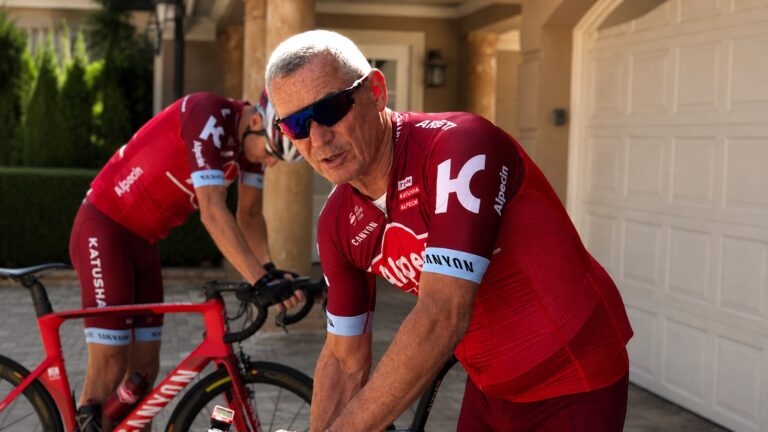
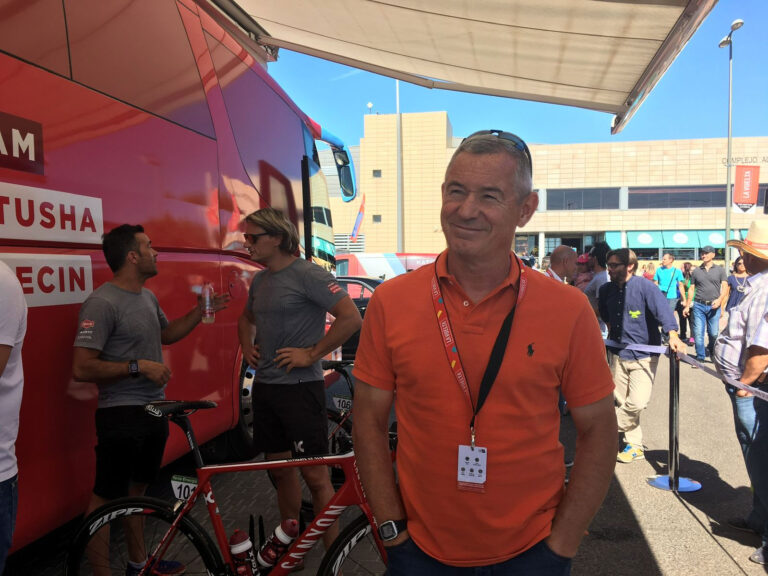
Team Katusha was founded and sponsored by entrepreneur and former professional cyclist Igor Makarov, whose vision helped establish the team as one of the world’s leading WorldTour organizations. Makarov later served on the UCI Management Committee, where he contributed to the governance and global development of professional cycling. The professional cycling team quickly evolved into an international, Swiss-registered WorldTeam operating under UCI regulations. Riders came from Spain, Norway, Italy, Germany, Slovenia, Portugal, Belgium, Australia, Switzerland, Latvia, France, Kazakhstan and many other nations. English became the working language inside the team bus, while the equipment, sponsors and technical partnerships reflected a truly global organisation.
This international character became one of Katusha’s greatest strengths. It blended different cycling cultures into a single identity – one united not by nationality, but by ambition.
A New Team with Big Dreams
Launching a new WorldTour team is never easy. Success usually takes years. Katusha needed only a few months.
The inaugural roster included experienced stars such as Filippo Pozzato, Robbie McEwen, Serguei Ivanov, Vladimir Gusev and Mikhail Ignatiev. The objective was clear: compete immediately with the world’s best teams.
By the end of its debut season in 2009, Katusha had already collected 24 victories and established itself as one of the peloton’s fastest-rising organisations.
But one race changed everything.
The victory that announced Katusha to the world
Just four months after entering the WorldTour, Team Katusha achieved its first truly iconic victory.
The Amstel Gold Race is unlike any other Classic. More than thirty twisting climbs snake through the Dutch province of Limburg, where positioning matters almost as much as strength. Every corner presents an opportunity, or a disaster.
As the favourites hesitated approaching the final kilometres, Serguei Ivanov sensed the moment. Rather than waiting for a sprint against stronger finishers, the experienced rider attacked decisively. It was a calculated gamble.
Behind him, confusion spread through the chasing group. By the time they organised themselves, Ivanov was gone.
Crossing the finish line alone, he delivered Katusha’s first major Classic victory. Cycling journalists immediately recognised the importance of the result. Until then, Katusha had been viewed as an ambitious newcomer. After Amstel Gold Race, it was spoken of as a genuine WorldTour contender.
Interesting fact: Ivanov became the first rider to win a WorldTour Classic wearing the Katusha jersey, a landmark moment only months after the team’s creation.
Every professional cycling team dreams of hearing its name announced after a Tour de France stage victory. Katusha achieved that dream in its very first season.
On Stage 14 of the 2009 Tour, Serguei Ivanov escaped in a powerful breakaway through the rolling roads of eastern France. Timing was everything. With perfect judgment, he launched his decisive move while the others hesitated.
The gap quickly grew.
Television helicopters followed the lone Katusha rider racing through the French countryside.
When Ivanov crossed the line in Besançon with both arms raised, millions of viewers around the world saw the Katusha jersey celebrating on cycling’s biggest stage.
Overnight, Team Katusha had become a household name.
The Arrival of Purito
If Serguei Ivanov introduced Team Katusha to cycling fans, Joaquim Rodríguez transformed it into one of the world’s elite teams.
Nicknamed “Purito,” Rodríguez was unlike almost any rider of his generation. Small in stature but explosive on steep gradients, he possessed one of the most feared accelerations in modern cycling. Television commentators often joked that when the road reached double-digit gradients, everyone already knew what would happen. Purito would attack. And usually nobody could follow.
The Race of the Falling Leaves belonged to Purito
October in northern Italy has always carried a certain magic. The leaves turn gold. The mornings become cold. The final Monument of the season begins.
Known as The Race of the Falling Leaves, Il Lombardia rewards climbers with courage and impeccable timing. In 2012, persistent rain made the race even more demanding.
As the riders climbed toward Villa Vergano, Rodríguez unleashed the acceleration that had become his trademark. Within seconds, the strongest riders in the world were riding at their own pace.
Only Purito seemed to be racing.
He crossed the finish line alone, arms aloft, completing one of the greatest individual seasons of the decade. Cycling publications described the victory as the perfect conclusion to a campaign that had already made Rodríguez the world’s highest-ranked rider.
Interesting fact: Rodríguez became the first Spanish rider ever to win Il Lombardia, adding another chapter to his extraordinary 2012 season.
Winning a Monument once is difficult. Winning it twice in succession is legendary.
Returning as defending champion, Rodríguez carried the pressure of expectation. Yet when Il Lombardia reached its decisive climb, history repeated itself.
The explosive attack. The desperate chase. The lonely finish.
Purito defended his title in style and established himself as the undisputed king of the autumn Monument.
Very few riders have ever dominated Il Lombardia so completely.
The Best Rider in the World
The 2012 season was remarkable not simply because of victories.
It demonstrated complete consistency.
Rodríguez finished the year as the No. 1 rider in the UCI WorldTour rankings, while Team Katusha finished second among all WorldTour teams. The squad also celebrated podium finishes in both the Giro d’Italia and the Vuelta a España.
Cycling media increasingly referred to Katusha as one of the most complete organisations in professional cycling.
A Battle Won in Court
One of Team Katusha’s greatest victories happened away from the finish line.
At the end of 2012, despite its outstanding sporting results, the UCI refused to grant Katusha a WorldTour licence. The decision shocked riders, sponsors and journalists alike.
Rather than accepting the verdict, the team appealed to the Court of Arbitration for Sport (CAS).
The appeal succeeded. The licence was restored.
The ruling became one of the most influential legal decisions in modern cycling, reinforcing the importance of transparent governance and objective licensing criteria.
Alexander Kristoff Changes Everything
As Purito dominated the mountains, another champion quietly emerged.
Alexander Kristoff. The Norwegian possessed an unusual gift. While many sprinters became weaker after six hours of racing, Kristoff somehow became stronger.
Rain.
Cold.
Crosswinds.
Cobbles.
The harder the conditions became, the more dangerous he looked.
Former teammates often joked that Kristoff looked fresher after 280 kilometres than most riders after 80.
The longest day became the greatest day. Almost 300 kilometres. Nearly seven hours of racing.
Cold rain swept across the Ligurian coast as the peloton tackled one of the most demanding editions of Milan–San Remo in recent memory.
Most riders simply hoped to survive. Katusha had a plan.
Veteran Luca Paolini, widely regarded as one of the smartest road captains in the peloton, shepherded Kristoff through the chaos with remarkable precision. Television helicopters repeatedly showed the two Katusha jerseys moving together through the crowded finale.
As Via Roma approached, Kristoff launched his sprint earlier than expected. Nobody could respond.
Cycling journalists later praised Katusha’s flawless teamwork, calling it one of the finest tactical performances seen in a Monument for years.
The victory instantly transformed Kristoff from a respected sprinter into one of the biggest stars in world cycling.
Interesting fact: Kristoff later admitted that he had watched the replay of that finish countless times because it completely changed his career.
A masterpiece on the cobbles
In Belgium, the Tour of Flanders is more than a bike race. It is a national celebration.
Thousands of fans line the Oude Kwaremont and Paterberg hours before the riders arrive, turning the cobbled climbs into living stadiums. Most pre-race predictions focused on Fabian Cancellara, Peter Sagan and Niki Terpstra.
Alexander Kristoff had different ideas.
Rather than reacting to every attack, he remained calm while others spent precious energy. Then came the decisive move.
With over 30 kilometres still remaining, Kristoff accelerated clear of the favourites. No one could bridge the gap.
As he entered Oudenaarde alone, even the passionate Belgian crowds applauded the Norwegian’s remarkable ride. French newspaper L’Équipe described it as “une démonstration de puissance” – a demonstration of strength.
Interesting fact: Kristoff became the first Norwegian rider ever to win the Tour of Flanders, making front-page news far beyond the cycling world.
Simon Špilak – The Rain King
Every peloton has its legends.
Simon Špilak’s legend involved the weather.
If sunshine appeared in the forecast, rivals barely mentioned his name. If heavy rain was predicted, suddenly everyone considered him a favourite.
The quiet Slovenian had an extraordinary ability to thrive in miserable conditions that frustrated almost everyone else. He proved it by winning the Tour de Suisse in both 2015 and 2017, mastering wet mountain roads with remarkable composure.
Fans affectionately nicknamed him “The Rain King.”
One journalist joked: “If Noah had organised a bicycle race, Špilak would probably have won it.”
Winning Everywhere
Katusha’s greatest strength was diversity. It won Monuments with Joaquim Rodríguez and Alexander Kristoff. It conquered week-long stage races through Simon Špilak. It celebrated Grand Tour stage victories with Serguei Ivanov, Ilnur Zakarin, Rein Taaramäe and others.
Daniel Moreno triumphed at La Flèche Wallonne. Luca Paolini mastered Gent–Wevelgem. Tony Martin brought world-class time trial power. Marcel Kittel added sprint victories during the team’s final years.
Very few WorldTeams of the era possessed such breadth of talent.
The Golden Season
If one year represents the peak of Team Katusha, it is 2015.
The squad collected 40 victories, the highest total in its history.
Those wins included:
- Tour of Flanders
- Tour de Suisse
- Grand Prix Cycliste de Québec
- Tour de France stages
- Multiple WorldTour races
- Numerous victories across Europe
It was a season that demonstrated the maturity of an organisation capable of winning in almost every terrain and racing format.
Beyond the Finish Line
Katusha also helped shape modern cycling through innovation.
Its partnerships with Canyon and SRAM contributed to the development of cutting-edge bicycles and components used throughout the WorldTour. Riders regularly tested new equipment under the toughest race conditions, influencing technologies that later became available to everyday cyclists.
The team also embraced sports science, aerodynamic optimisation and data analysis at a time when these disciplines were becoming increasingly important in professional racing.
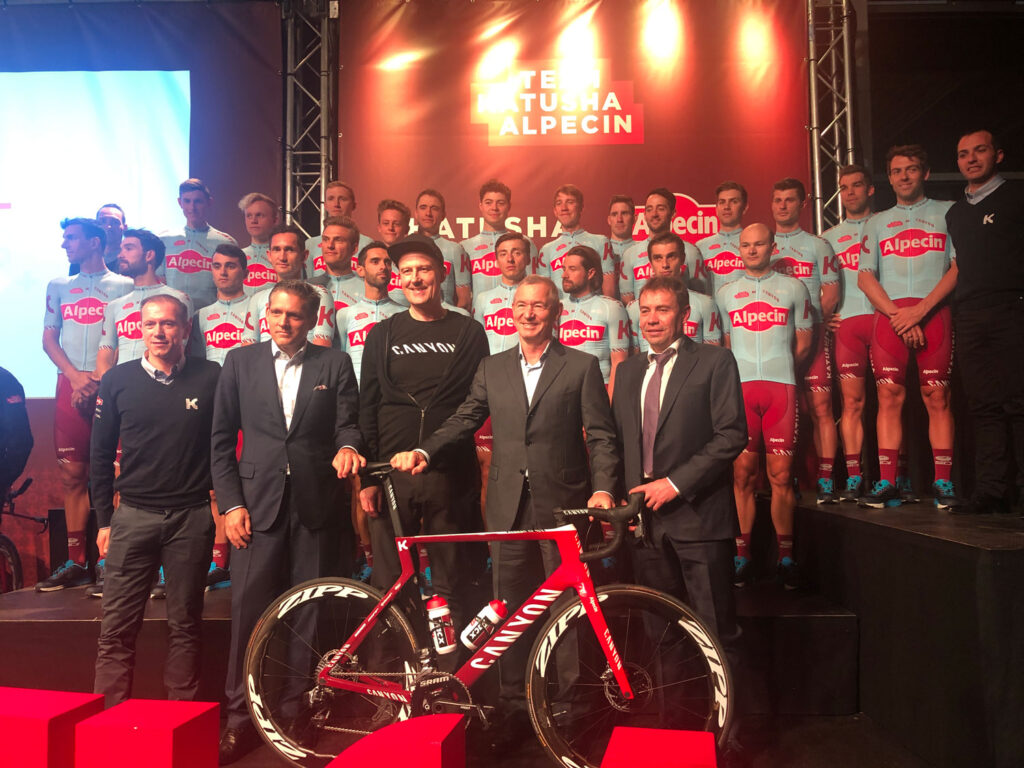
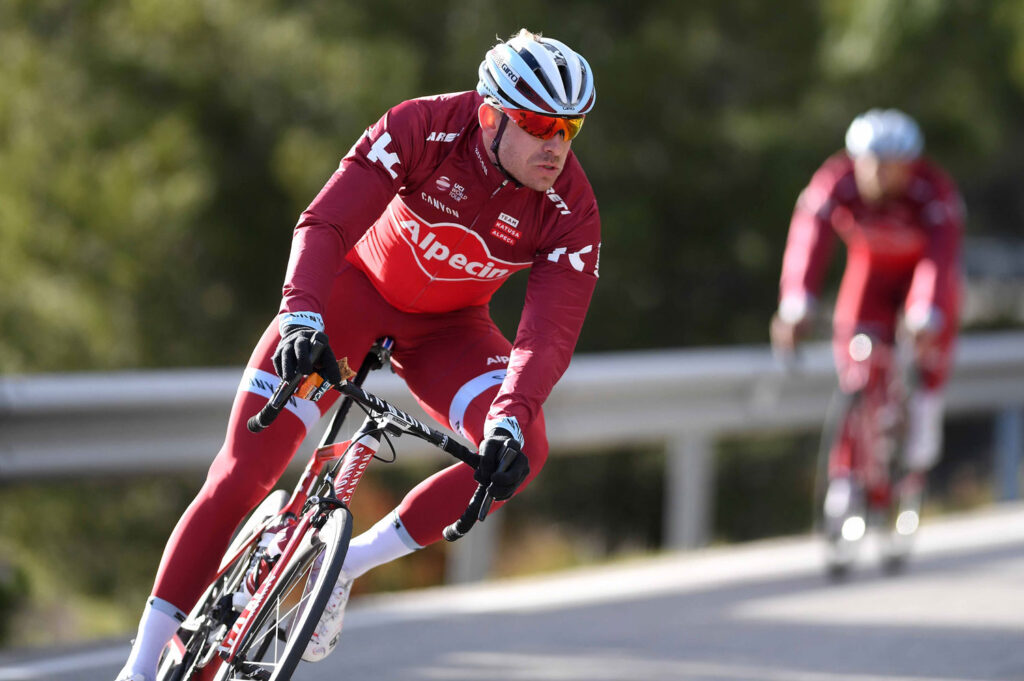
In 2017, German brand Alpecin joined as title sponsor, creating Katusha–Alpecin and reinforcing the team’s international identity.
Although victories became less frequent during the final seasons, the team continued to compete at the highest level until the WorldTour licence was sold to Israel Cycling Academy after the 2019 season.
The Katusha jerseys disappeared from the peloton.
The legacy did not.
Why Team Katusha Still Matters
Some teams are remembered for one great champion. Others for one unforgettable race.
Team Katusha is remembered for something much rarer.
It built a culture capable of producing champions across every discipline of road cycling.
From Ivanov’s breakthrough at Amstel Gold Race to Purito’s mastery of Lombardia, from Kristoff’s unforgettable Monument victories to Špilak’s rain-soaked triumphs in Switzerland, Katusha consistently raced with intelligence, courage and ambition.
In just eleven seasons, it secured four Monument victories, Grand Tour stage wins, WorldTour honours and a reputation as one of the most respected teams of its generation.
Today, long after the final Katusha jersey crossed the finish line, cycling fans still remember one thing above all:
When the road became hardest, Team Katusha usually became strongest.
One of Katusha’s greatest strengths was the quality of its sporting management. Over eleven seasons, the team assembled an experienced leadership group that included Grand Tour winners, Olympic champions, Monument winners and some of the peloton’s most respected tacticians. Their collective expertise helped transform Team Katusha from a new WorldTour entrant into one of professional cycling’s most respected and successful international teams of the 21st century.
The Vision Behind Team Katusha
Behind every great sporting organisation stands a visionary.
For Team Katusha, that figure was Igor Makarov.
A former professional cyclist and International Master of Sports, Makarov founded Team Katusha in 2008 with an ambitious objective: to create a team capable of competing with, and defeating, the world’s most established WorldTour organisations. Under his long-term stewardship and sponsorship, Katusha evolved into one of the strongest and most respected teams in professional cycling, attracting elite riders from across Europe and beyond. Unlike many WorldTour teams that frequently changed ownership or principal sponsors, Katusha benefited from stable leadership throughout its existence, allowing it to develop a clear identity and long-term sporting strategy.
Makarov’s contribution extended well beyond Team Katusha. Having served on the UCI Management Committee from 2011 to 2025, he played an active role in the international governance and development of cycling while also supporting numerous European national federations through the Union Européenne de Cyclisme (UEC). His efforts reflected a broader commitment to strengthening the sport at both elite and grassroots levels. His contribution to cycling has been recognized internationally. In 2016, he received the UCI Merit Award in recognition of his contribution to the development of world cycling. More recently, the Cyprus Cycling Federation presented him with the Aristides Konstantinidis Award for his long-standing support of cycling and his role in developing the sport in Cyprus through youth programs, international events, and infrastructure initiatives. For Makarov, Team Katusha was never simply a professional cycling team, it was part of a broader vision to promote cycling, inspire young athletes, and demonstrate that a truly international team could succeed at the highest level of the sport. That vision helped shape one of the most successful WorldTeams of the modern era.